


 Go Back
Share
Beyond Access: Insights from the Bharat Survey for EdTech 2025
By Mansi Agarwal
Feb 24, 2026
India’s EdTech journey is entering a new phase, shifting from expanding access to ensuring meaningful and equitable usage. Drawing on insights from BaSE 2025, the piece highlights growing adoption of technology and AI among students and teachers, alongside emerging risks and usage gaps. It underscores the need for evidence-led policy, responsible AI integration and solutions designed around the real needs of low-income households to truly improve learning outcomes.
The use of digital technology in education is no longer a distant promise in India but a lived reality for millions of children and teachers. With near-universal smartphone access and growing exposure to EdTech and AI tools, the question is no longer only about availability of infrastructure but also its meaningful use for improving learning.
At the Central Square Foundation (CSF), our mission has always centred on democratising the quality of education with technology. Technology and AI, in particular, presents a once-in-a-lifetime opportunity to personalise learning, support teachers and bridge resource gaps. However, if not used responsibly, it can widen learning inequalities rather than reduce them.
The Bharat Survey for EdTech (BaSE) has been designed to bring the voice of the user in Bharat into the discourse on EdTech. BaSE 2025 is the second edition of this national survey to understand access, usage and sentiment associated with EdTech and AI among low-income children, parents and teachers. It is a critical step towards ensuring informed decision-making on EdTech policy, product design and programme implementation for inclusive and equitable EdTech adoption at scale.
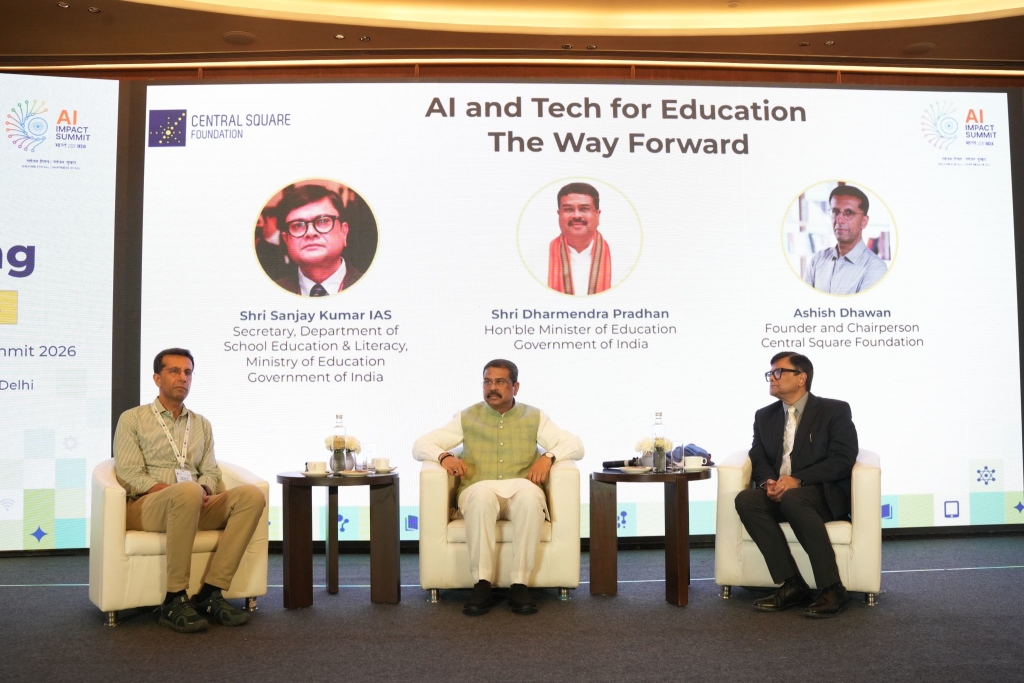

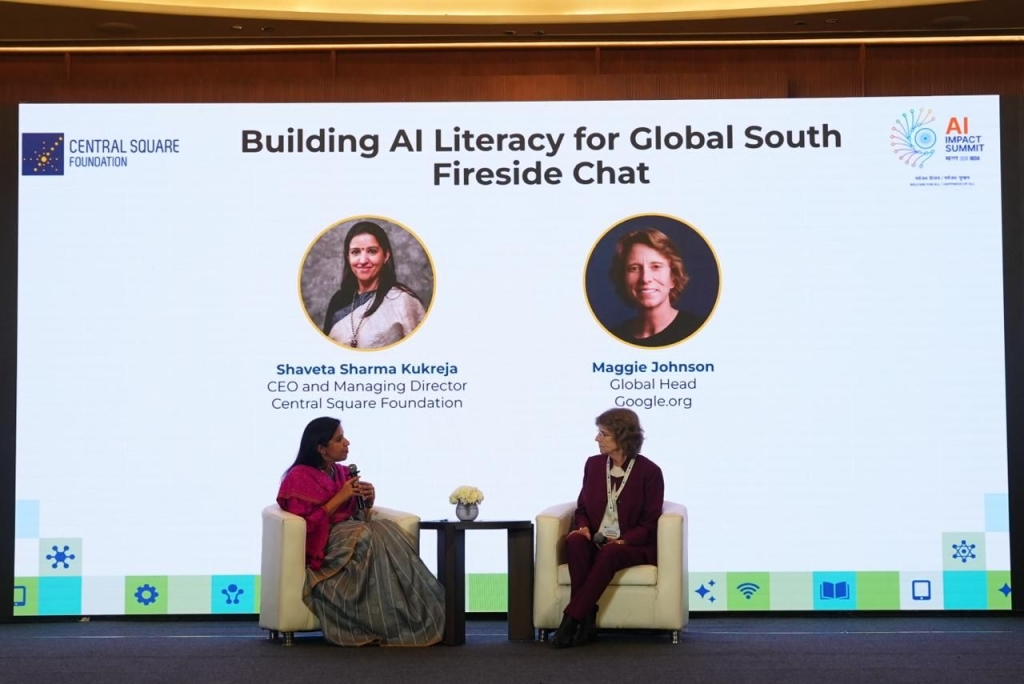
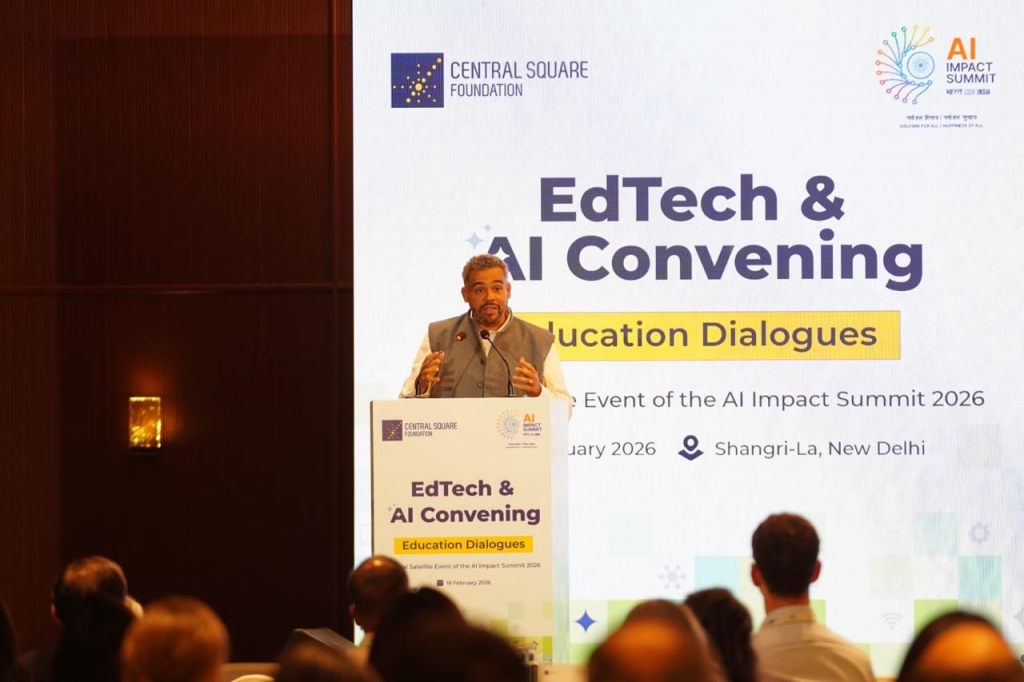

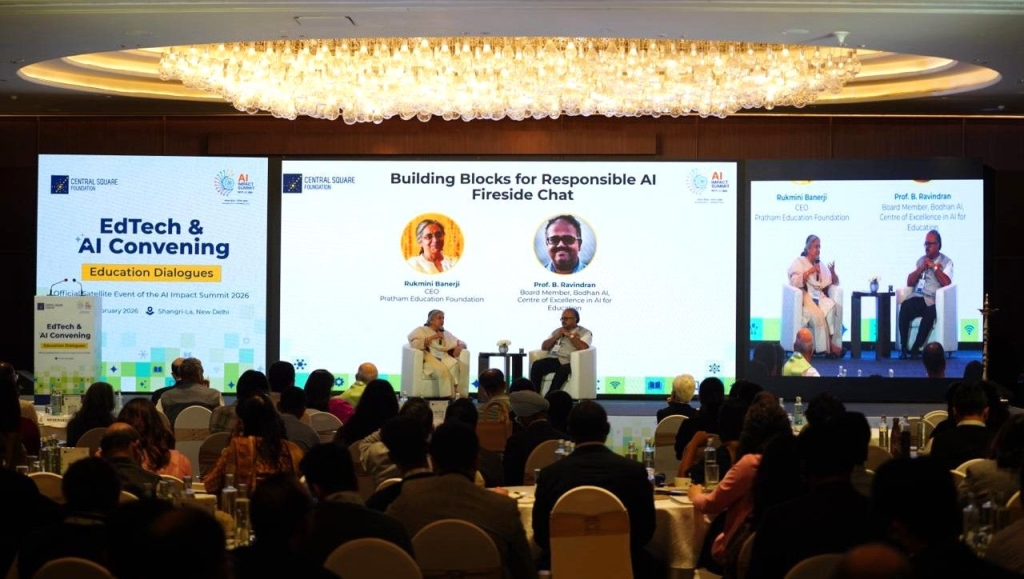
Launched at the EdTech and AI convening – Education Dialogues, an official satellite event of India AI Impact Summit, convened by the Ministry of Electronics and Information Technology, Government of India, BaSE 2025 findings are both timely and significant. As conversations around AI increasingly focus on innovation and infrastructure, the launch brought a critical and underrepresented perspective to the table – the voice of the end user in Bharat.
BaSE 2025 BaSE 2025 provides insights across 4 key themes and covers India’s diverse demographic perspectives
The first theme, Access to Technology, examines the availability of tech infrastructure such as smartphones and internet, at a household and school level, as well as access patterns among children and teachers. The second theme, Usage of EdTech explores how teachers and students are actually engaging with technology. This includes the types of EdTech tools they use, the common use cases they engage in and the features most valued by them. The third theme,User Sentiment around EdTech Adoption captures how users perceive the quality of the existing education system, the impact of using EdTech, as well as the risks associated with technology use. This edition also introduces an additional theme ofAI Awareness and Usage in order to examine the extent of awareness and adoption of AI-based tools for teaching and learning.
The BaSE 2025 survey was administered between August 2025 and January 2026, to15,000 parents, children and teachers across 10 states, selected so as to be representative of India’s geographical, digital and population diversity. The survey sample included a mix of households, children and teachers that cover diverse demographic characteristics.
BaSE 2025 findings show that India’s EdTech ecosystem has entered a new phase.
Bharat is going digital. 90% of households own one or more smartphones, and 72% of children are accessing the smartphone in the household. Majority of this access is shared, with a higher likelihood of sharing with the mother as compared to the father. Nearly all (99%) children report having internet access while using the smartphone and 84% of them spend more than 30 minutes on the smartphone, in a typical day.

There is widespread awareness and usage of EdTech among children and teachers alike.
Overall, 63% of children and 87% of teachers report using EdTech, with more than half of them using it daily.


Schools continue to anchor how children use EdTech. Common uses for children include practice and doubt resolution (77%) and exam preparation (47%). For most children (>94%), EdTech largely means YouTube, WhatsApp and Google Search, with limited use of specialised learning tools. Only 6% use specialised EdTech apps.
Teachers use EdTech in a more structured manner and their use spans a wider range of apps and tasks. Along with YouTube, WhatsApp and Google Search (84% use at least one), 45% also use specialised platforms such as DIKSHA (21%), Nishtha (13%) and E-pathshala (12%). Teachers use EdTech for lesson planning and delivery (63%), communication (77%) and administrative work (29%).


COVID-19 seems to have been an inflexion point for EdTech usage.
Nearly four out of five EdTech-using children report that they started using EdTech during or after the pandemic. Teachers, however, were already familiar with tech tools for teaching, with 34% of EdTech-using teachers reporting usage even before the pandemic. For children, schools are the primary discovery pathway for EdTech, with 63% of EdTech-using children reporting they first started using EdTech on the recommendation of the school or their teacher. Teachers, however, are more likely to discover EdTech on their own, with 37% of EdTech-using teachers reporting self-discovery as the most common channel for EdTech discovery.
EdTech users perceive positive benefits associated with EdTech use.
Majority of the children and parents feel that EdTech boosts learning (75%) and helps parents better support their child’s learning (95%). Teachers express even stronger confidence in improved learning outcomes (81%) and 96% feel that using EdTech helps them save time.

That being said, children, parents and teachers also recognise that the use of EdTech is associated with risks.
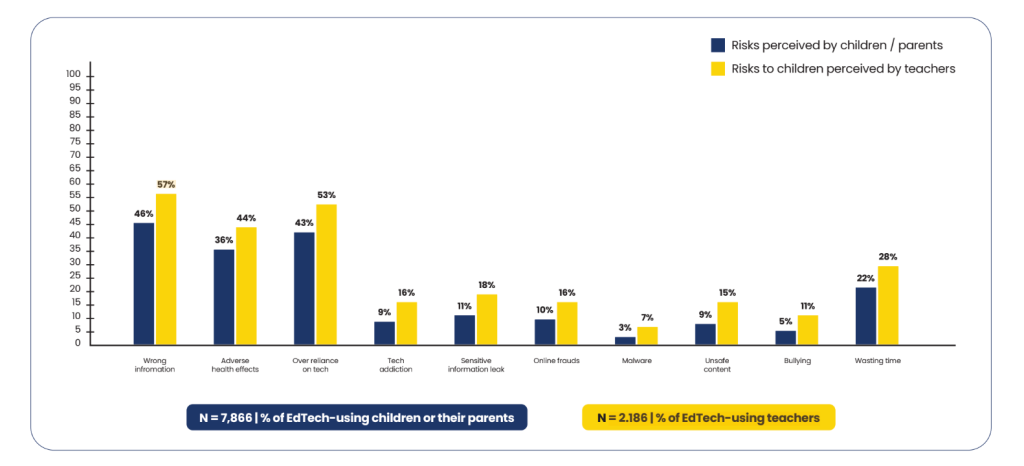
Among respondents for EdTech-using children, 60% believe EdTech use carries risks, with two-thirds personally experiencing at least one risk in the past 12 months. The main concerns are overuse and exposure to wrong or inappropriate information and for some children, similar fears even discourage use of smartphones, EdTech or GenAI.
Teachers express similar concerns about risks for both students and themselves. More than half of EdTech-using teachers believe EdTech poses risks to children (59%) and teachers (52%). Concerns again centre on overuse and inaccurate or inappropriate information. While users recognise risks, they struggle to address them effectively, with the majority reporting that they do not feel completely equipped to mitigate them.
Children and teachers widely recognise and use GenAI for teaching and learning, but persistent misconceptions highlight the need to scale AI literacy.
Over half (51%) of EdTech-using teachers already use GenAI, mainly for lesson preparation and delivery. Among EdTech-using children, more than one in three (35%) use GenAI for learning and two-thirds (69%) do so daily. Clear, on-demand responses are key benefits cited by both children and teachers.

However, high usage does not necessarily mean that users understand the technology or know how it works. Many children and teachers hold misconceptions about how AI works. While 85% of GenAI-aware children and 46% of GenAI-aware teachers claim they understand it, three-fourths of these children and half of these teachers confuse it with internet search and others think it simply copies online information.
India stands at a defining moment in its education and technology journey.
Access is no longer the main constraint. Devices are accessible. Connectivity is widespread. Teachers and students are already experimenting with EdTech and GenAI for teaching and learning. The real question now is whether this digital momentum will translate into measurable learning gains. If India aspires to build a Viksit Bharat, the integration of technology into education has to be intentional. It must be evidence-led, user-centric and equity-focused. As India builds its digital future, education must remain at the centre of its AI ambition and BaSE 2025 brings critical voices into this national conversation.
Keywords
Authored by

Mansi Agarwal
Project Manager, EdTech , Central Square Foundation
Share this on