


 Go Back
Share
Inside CSF EDuConclave 2026: Ankho Dekhi, Conversations That Mattered
By Radhika Israni and Sarvpriya Awasthi
May 4, 2026
Central Square Foundation hosted the second edition of the CSF EDuConclave, on 24 April 2026, in New Delhi, to mainstream conversations on Foundational Literacy and Numeracy (FLN) and Early Childhood Education (ECE) while reflecting on the journey of the last five years under the NIPUN Bharat Mission; leveraging EdTech & AI to strengthen teaching and learning in the classrooms; exploring the role of districts as last-mile drivers of NIPUN Mission fidelity, examining the role of philanthropy for system support in education and strengthening school governance for better learning for all children in India.
Improving learning outcomes in India at scale calls for deep collaboration across stakeholders and sectors. As Shri Sanjay Kumar, IAS, Secretary, Department of School Education & Literacy, Ministry of Education, Government of India said:
“Education is not the responsibility of Sarkar alone; it is a collective effort of Sarkar, Samaj, Bazaar and Sanstha.”
– Shri Sanjay Kumar, IAS, Secretary, Department of School Education & Literacy, Ministry of Education, Government of India
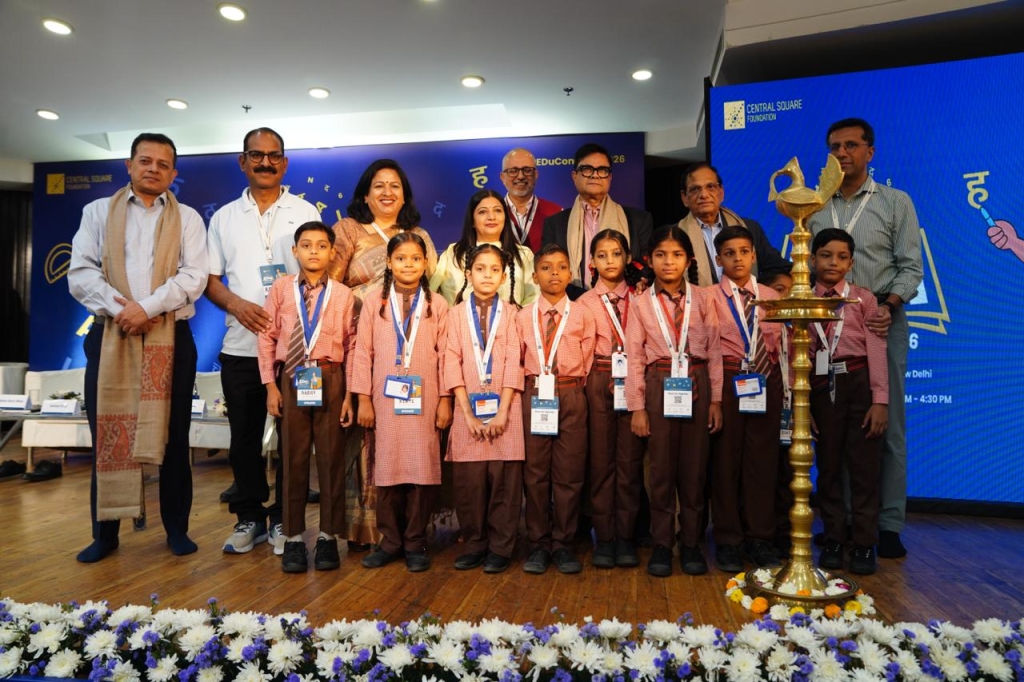
It is this belief that anchored Central Square Foundation’s EDuConclave 2026, convened on 24 April 2026. Designed as a platform to bring together policy, practice and evidence, the conclave aimed to reflect on the journey of the past five years under the NIPUN Bharat Mission, while identifying the role of and priorities for Foundational Literacy and Numeracy (FLN), Early Childhood Education (ECE), EdTech and AI and School Governance in strengthening student learning outcomes.
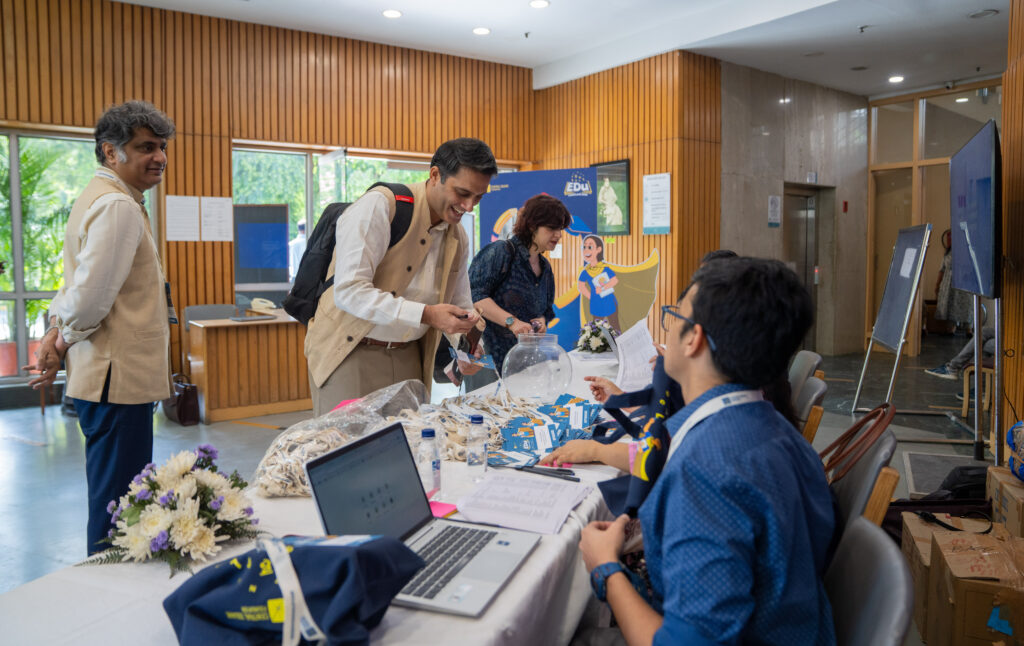
The convening brought together a diverse group of stakeholders, including senior government officials, state and district leaders, policymakers, researchers, academicians, donors and partners, creating a shared space to reflect on progress, surface challenges and align on the way forward for strengthening the Indian education landscape.
What Set EDuConclave 2026 Apart
What distinguished this year’s EDuConclave was its effort to anchor system-level conversations in classroom realities.
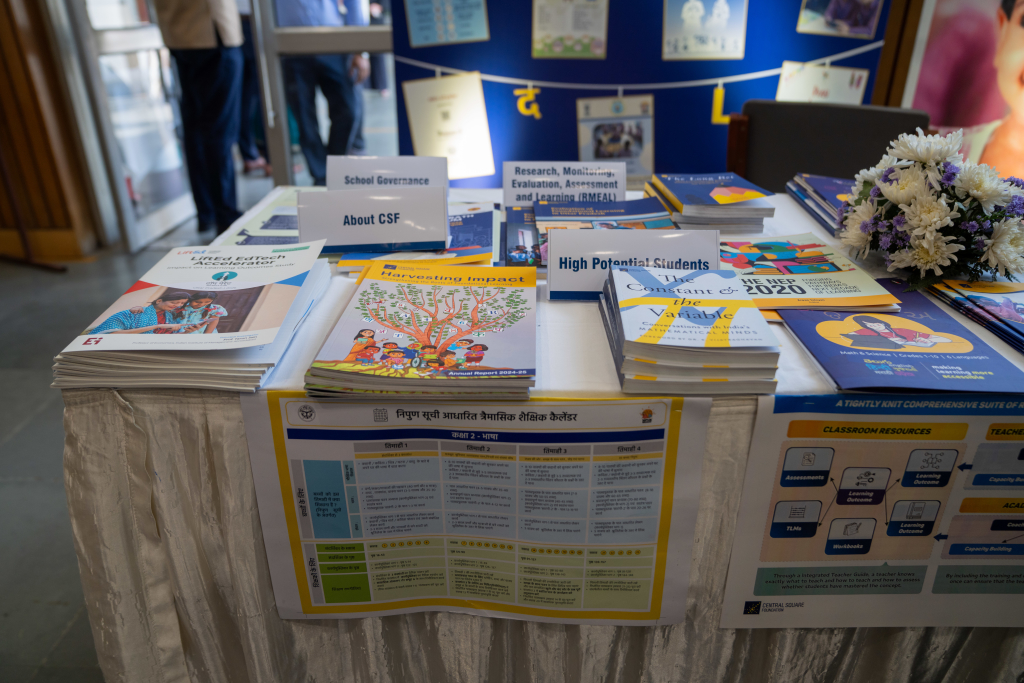
A dedicated exhibition stall, Knowledge Shala, showcased a range of multilingual teaching-learning materials (TLM) and academic resources across FLN, ECE, EdTech, School Governance and High Potential Students – developed, disseminated and actively used by more than 10 State Government Education Departments.


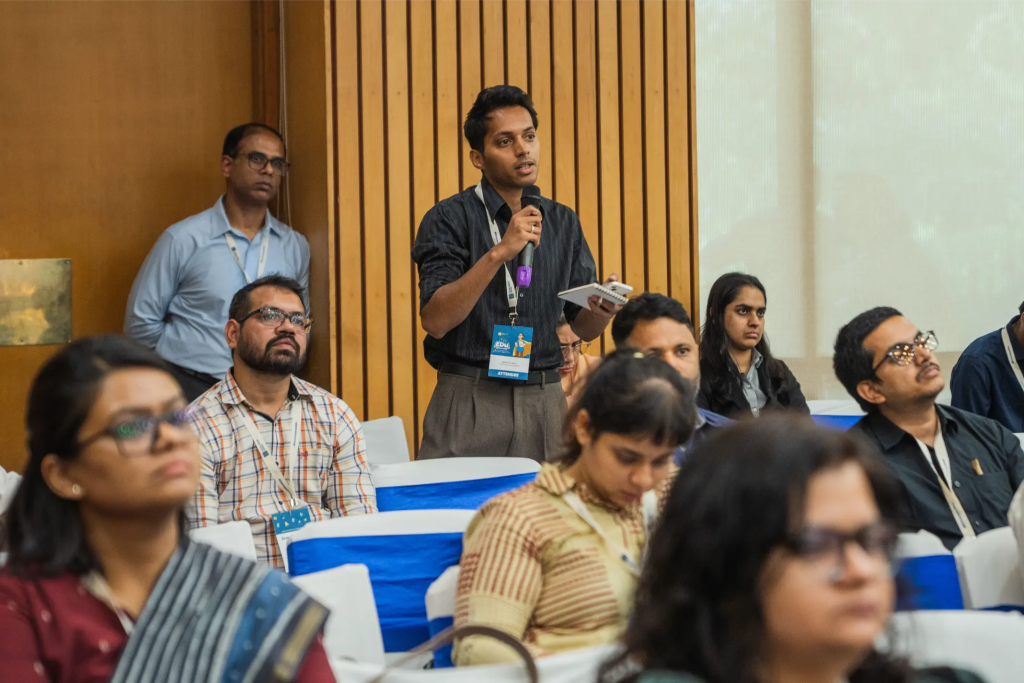

Complementing this were human-interest story panels, bringing voices from the ground into the convening.
- The story of Munita (Gorakhpur, Uttar Pradesh), a parent, reflected the growing role of parents in actively supporting their child’s learning journey;
- Rahat’s story (Ghaziabad, Uttar Pradesh) illustrated how foundational learning can extend beyond classrooms, with children becoming enablers of learning within their own homes.
- Poonam Rani’s (Kaithal, Haryana) story demonstrated how the Chimple app made learning fun and enjoyable for primary-grade students, while also supporting teachers with homework allocation, tracking progress and more.
Together, these special elements ensured that this year’s conclave remained grounded in the lived realities of children, teachers and families, even as it engaged with system-level questions.
Deep Dives Into Sessions
EDuConclave 2026 brought together a series of sessions that went beyond surface-level conversations, unpacking what is working and what can be strengthened and improved further.
- Badalta Bharat, Viksit Bharat: Role of Philanthropy for System Support in Education
In an engaging conversation, Rakesh Bharti Mittal (Vice-Chairman, Bharti Enterprises), Ashish Dhawan (Founder-Chairperson, Central Square Foundation) and Ishmeet Singh (CEO, Central Square Foundation) reflected on what it takes to drive change at scale, placing philanthropy at the centre of system transformation rather than as a peripheral actor. The discussion underscored that lasting impact in education cannot come from standalone or parallel models, but from deep, trust-based partnerships with government systems. As Rakesh Bharti Mittal emphasised, “The private sector and philanthropy can act as catalysts, but lasting change must be led by the government.”
Building on this, the conversation highlighted philanthropy’s role in moving from pilots to proof to policy, supporting innovation, generating evidence and committing patient capital to embed solutions within public systems over time.
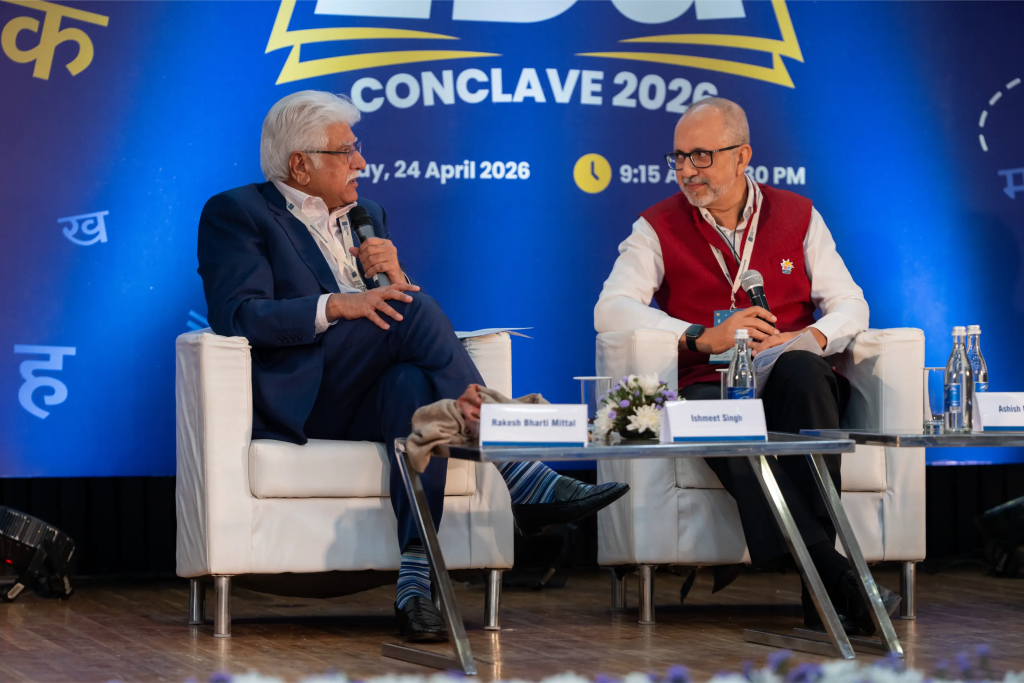

There was also a strong focus on investing in system capacity, particularly teachers and school leadership, recognising that scale and quality must go hand in hand. A key insight that emerged from this dialogue was that parallel models cannot solve for scale; real impact comes from working within government systems. Philanthropy’s role, therefore, is not to operate independently, but to demonstrate what works, build evidence and support adoption within the system.
- Badhti Buniyaadi Shiksha: Strengthening FLN in India
This session reflected on the five years of NIPUN Bharat Mission, with a strong focus on how Early Childhood Education (ECE) and Foundational Literacy and Numeracy (FLN) must function as a continuum to ensure holistic strengthening of early learning in India.
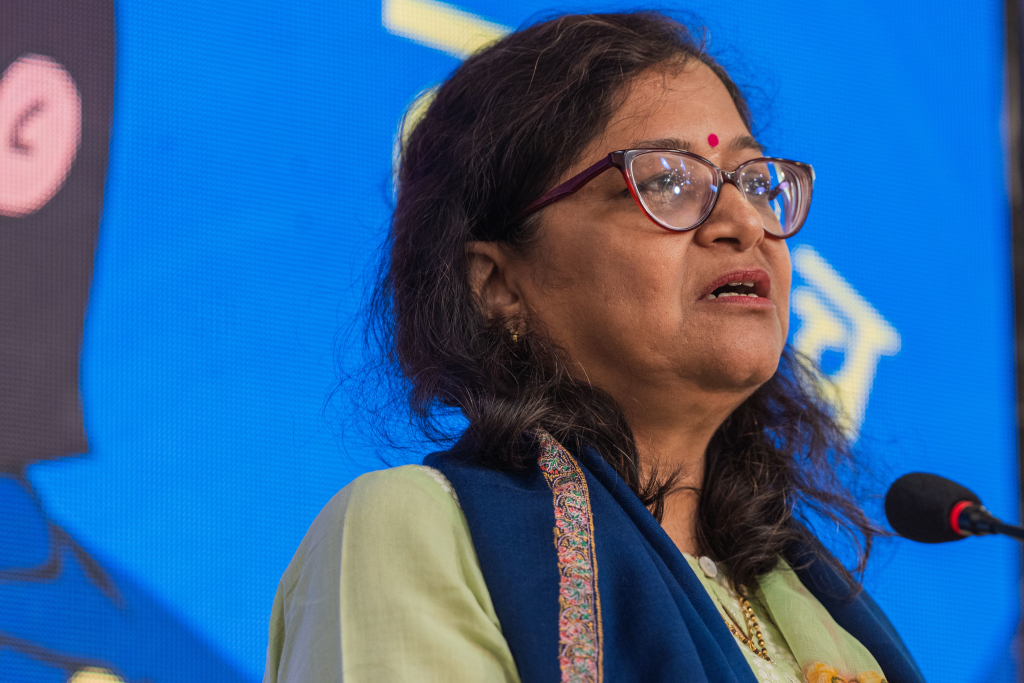
This session was introduced with a special address by Smt. Archana Sharma Awasthi, Additional Secretary, Department of School Education & Literacy, Ministry of Education, where she highlighted that while ECE has historically existed within the system, it remained deprioritised within service delivery. With renewed focus for it in the National Education Policy (NEP) 2020 and NIPUN Bharat Mission, there is now a structural shift toward integrating early childhood into the formal learning continuum, supported by defined learning outcomes, play-based pedagogy and aligned curricular frameworks. She noted that early success for NIPUN has been driven by clarity in learning goals, alignment with curriculum frameworks and strong implementation structures. However, the next phase requires going deeper, improving classroom transactions, strengthening teacher capacity (including ECE-specific training) and making more effective use of assessments.
Reinforcing the centrality of early learning to broader development goals, Dr. Ravi Kota, IAS, Chief Secretary, Government of Assam, underscored the long-term importance of these efforts, noting: “Human capital is our top priority; education is not just a sector, but the most powerful lever for Assam’s development, with strong foundations in early learning shaping the citizens of Viksit Bharat 2047.”
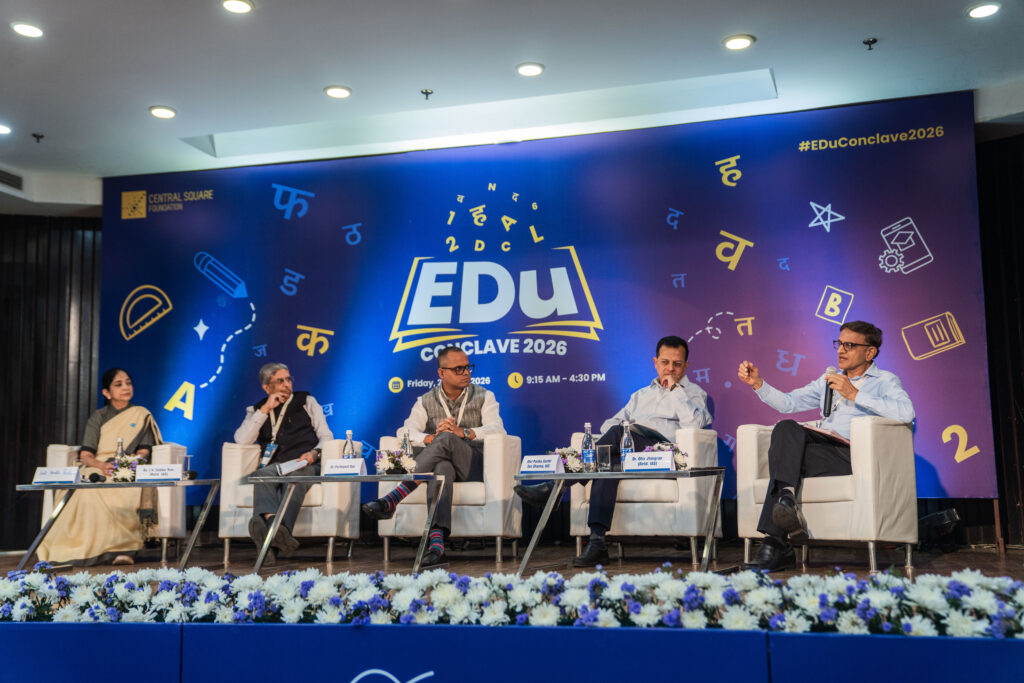
Panellists also reflected on key aspects critical to sustaining gains:
- Assessments: must move from reporting to informing instruction and enabling course correction at the classroom level
- Pedagogy: must adapt to student levels, with strong emphasis on home language and differentiated instruction
- Teacher support: continuous, on-ground academic support is essential, especially as teachers navigate both ECE and early grade classrooms
- Nipun ki Neev: Practice Excellence in States and Districts
This session reflected on bringing together perspectives from state and district leaders to examine both the progress made on FLN and the priorities for the coming years to improve last mile implementation. District leaders highlighted that success often comes from simplifying the problem and aligning the system around a clear, measurable goal.
For instance, Shri Anudeep Durishetty (IAS, District Collector, Khammam, Telangana) spoke about anchoring the system around a simple, urgent mission, “every child can read” and ensuring that this goal is consistently understood and owned across all levels. This clarity helps shift the focus from activities to outcomes and creates momentum across the system.
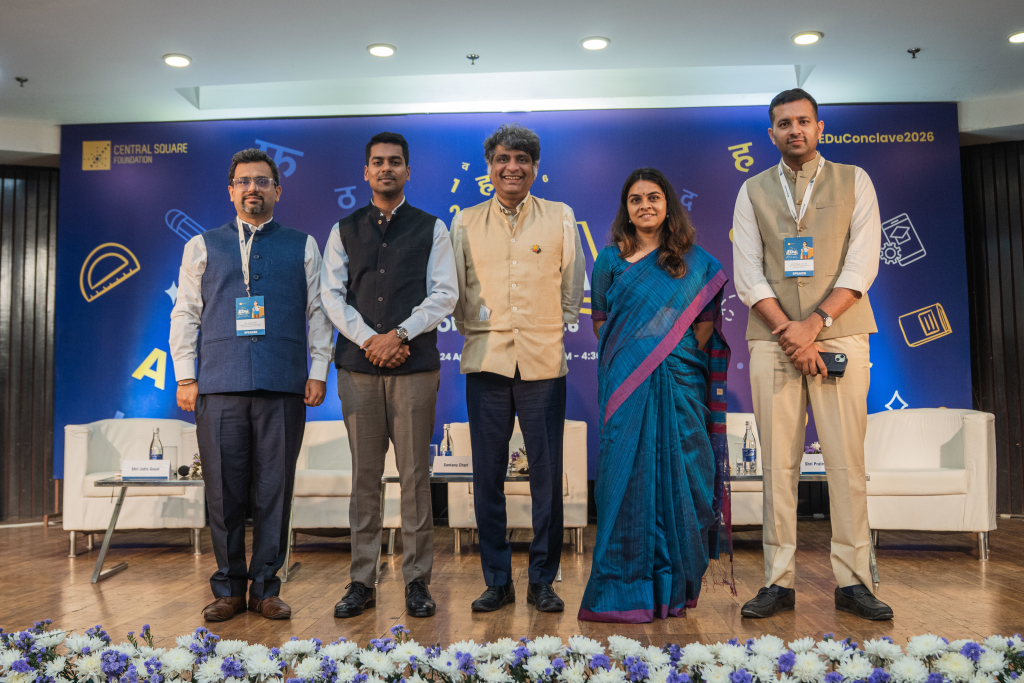

Key takeaways from the discussion included:
- Frequent, simple tracking of student learning levels, especially reading ability and foundational competencies, creates urgency and ownership.
- Teachers respond better to clarity than complexity.
- Recognition and support drive motivation more effectively than compliance
A strong theme that ran very strongly in this session was that districts are where policy becomes practice, which is why strengthening district-level capacity is essential for scale.
- School, Samaaj aur Badlav: From Report Cards to Accountability in Learning
This session revolved around discussions that examined the role of standardisation, credible assessments and transparent school-level data in closing long-standing information gaps within the education system. There was a strong emphasis on moving beyond fragmented approaches to create consistent, comparable ways of understanding what constitutes a ‘good school’ across contexts. A key insight that emerged from the session was that accountability strengthens when it is shared. As parents become more aware of learning outcomes, their engagement begins to shift from passive participation to active demand for school quality, creating bottom-up pressure that complements system-level reforms. In this way, community engagement moves beyond involvement to becoming a critical lever for driving sustained improvements in learning.
While access and infrastructure have improved significantly, learning outcomes remain uneven, partly because they are not always visible or measured in ways that drive action. As Rajni Shekhawat (Chief District Education Officer, Jodhpur, Rajasthan) noted, “School quality is one of the most important things, but the thing that is evaluated the least.”

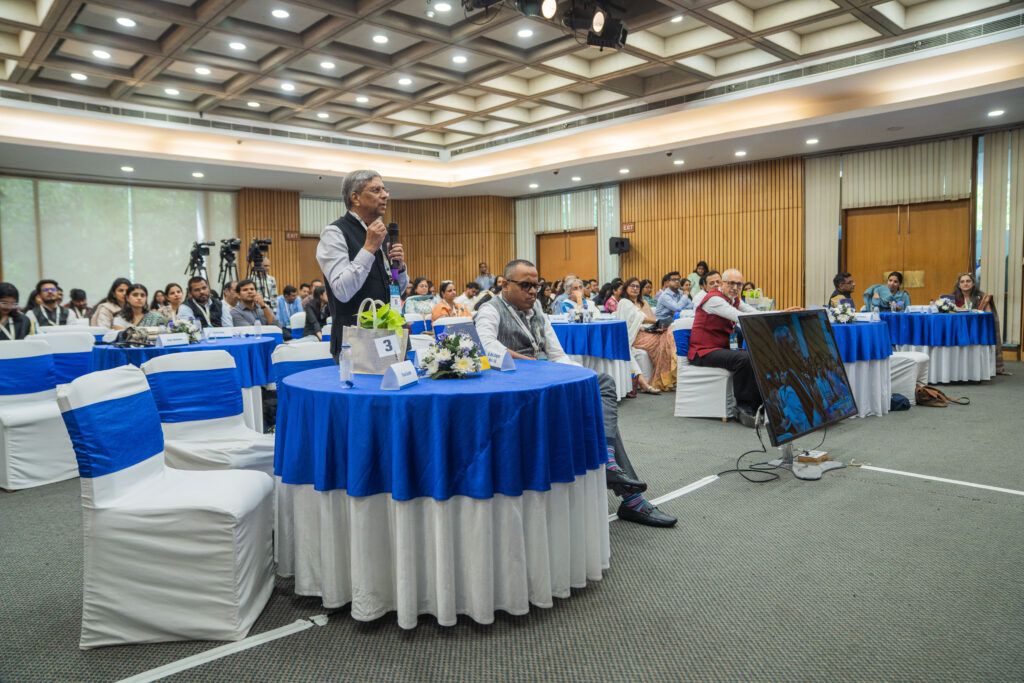
Key ideas that emerged from the discussion included:
- Making school-level data visible to parents and communities
- Using assessments to identify gaps rather than penalise schools
- Building constructive accountability through community engagement
- Masti ki Paathshala: Bringing Learning to Life
One of the most engaging sessions of the day was Masti ki Paathshala, conducted in collaboration with Sesame Workshop India.

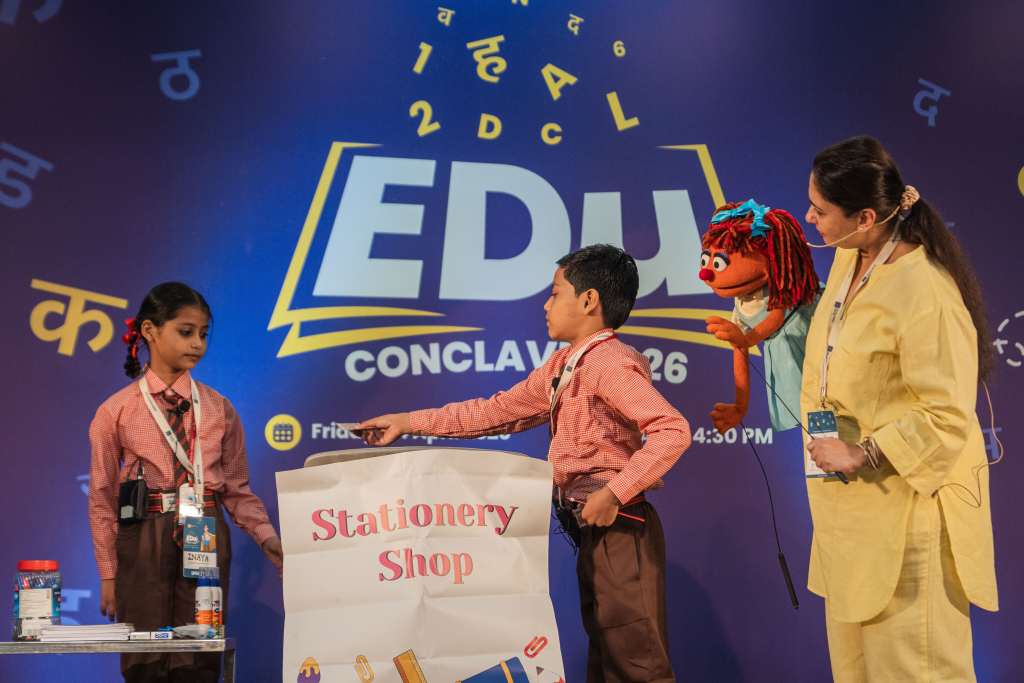
Featuring Elmo and Chamki, the famous muppets many children grew up watching, the session brought together children from Ghaziabad in an interactive learning experience. Through storytelling, songs and simple educational activities, the session demonstrated how foundational literacy and numeracy can be built through joyful, activity-based learning. The session, more importantly, served as a powerful reminder that at the heart of all system reform are children and that learning must remain engaging, accessible and meaningful.
- School se Ghar Tak: Leveraging EdTech for Quality Education in Bharat
This session examined the role of technology in improving learning outcomes, with a clear focus on what it takes to make EdTech work within real classroom and home contexts. Discussions moved beyond access and tools to address implementation challenges; how technology integrates with teaching practices, sustains student engagement and aligns with system priorities at scale. There was also a strong emphasis on the need for evidence-backed, context-aware solutions rather than standalone digital interventions.
The session kicked off with a special address by Shri Dheeraj Sahu, IAS, Additional Secretary, Department of School Education & Literacy, Ministry of Education, who shared a clear and grounded perspective and said, “If technology does not improve learning outcomes in classrooms at scale, it is not an innovation, it is a distraction.”
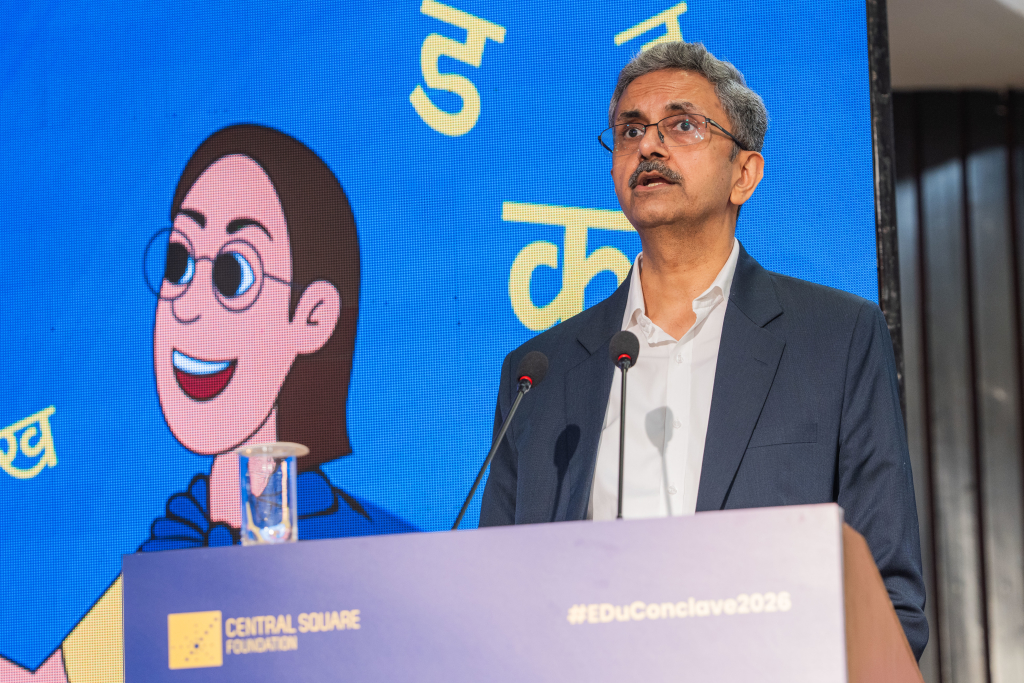
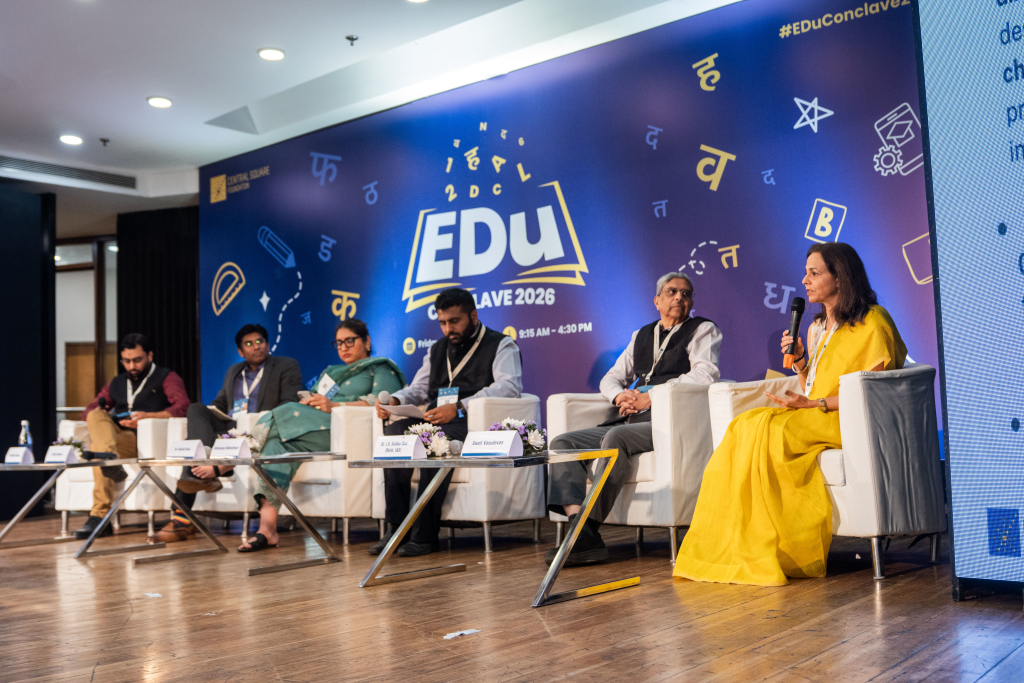
The session highlighted that the challenge is not the availability of tools, but their effective integration into classroom practice. India’s scale makes its education reform efforts uniquely complex. Yet, despite this complexity, emerging evidence points to meaningful progress.
- Rapid Fire with Dr. Rukmini Banerji and Dr Parmod Kumar
Another standout session was an energising rapid fire with Dr. Rukmini Banerji (CEO, Pratham Education Foundation) and Dr. Parmod Kumar (State Programme Officer, Department of School Education, Haryana), moderated by Sambhrant Srivastava (Associate Project Director, Central Square Foundation).
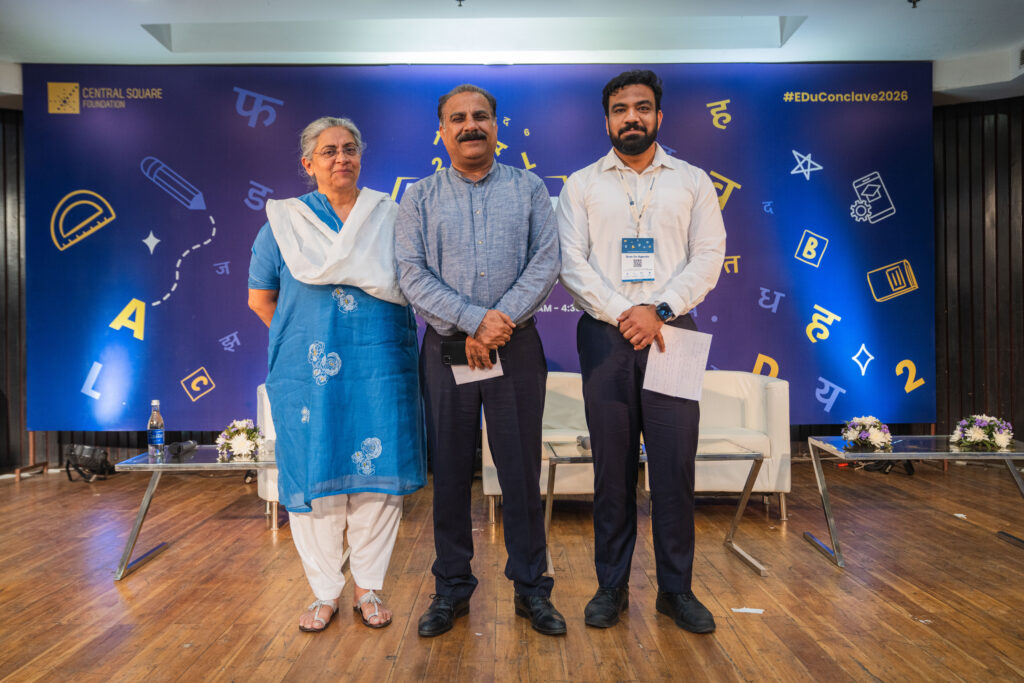
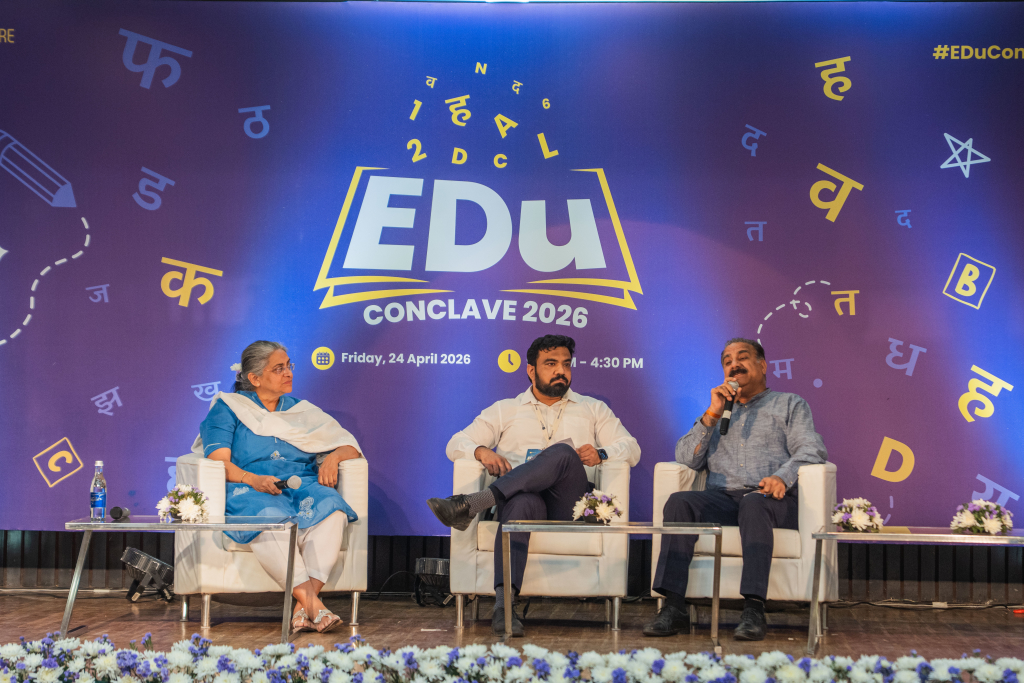
The conversation brought together system-level and practitioner perspectives on foundational learning, with a strong emphasis on extending the learning agenda beyond schools into homes. Dr. Pramod Kumar highlighted the importance of state-led implementation and parental engagement, capturing it through the idea of PM to MP — from Prime Minister to Mummy-Papa. This framing captured the idea that while education reform is driven by national vision and policy, its success ultimately depends on what happens at the household level. It emphasised that the ambition set at the top, by the Prime Minister to build a Viksit Bharat by 2047, can only translate into real learning outcomes if it is carried forward by parents (Mummy-Papa) in everyday interactions with their children.
On the other hand, Dr. Rukmini Banerji beautifully brought in a practitioner’s lens, highlighting that recent gains in foundational learning have been driven by structured pedagogy, clearer learning goals and evidence-led action. She also underscored that while large-scale training is important, it must be complemented with sustained classroom support and consistent implementation to translate into real learning gains. Further, she pointed to often-overlooked levers such as student attendance, parental engagement and targeted support for vulnerable children as essential to ensuring that progress is both inclusive and sustained.
Charting the Way Forward
India has made strong progress in defining what needs to be done. The opportunity now lies in doing it well, at scale and sustainably.
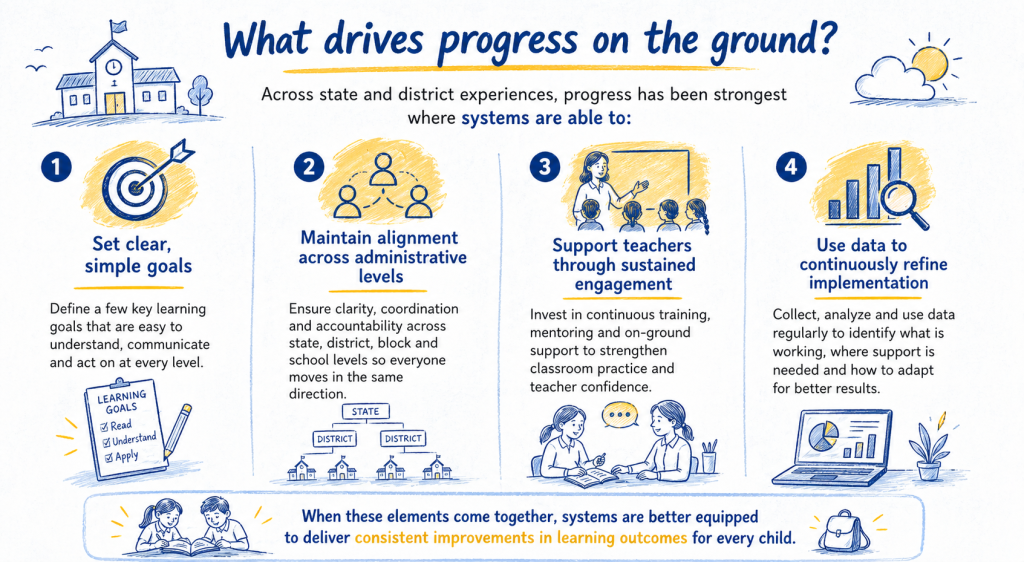
Across state and district experiences, progress has been strongest where systems are able to articulate a clear vision and objectives while ensuring alignment between different layers of the system, policy, administration and classrooms.
This becomes even more critical when viewed against the scale of India’s education landscape and its broader development trajectory. India is now a nearly $4 trillion economy, with clear aspirations of becoming a Viksit Bharat. At the same time, it is home to approximately 24.8 crore school-going children—each of whom will eventually enter the workforce. By 2047, nearly 14 crore young people will join the labour force, and the strength of this future workforce will depend on the learning outcomes we secure today.
As practitioners emphasised, the challenge is often not a lack of ideas, but the effectiveness with which existing strategies are implemented. India’s demographic moment is at a critical inflexion point. CSF EduConclave 2026 reinforced that real progress will require sustained collaboration across Sarkar, Samaaj, and Sanstha. Convenings like this play a vital role, not just in enabling dialogue but in driving alignment across diverse stakeholders to address complex challenges collectively.
The path ahead will demand persistence, partnership and a relentless focus on learning. As this convening demonstrated, there is both momentum and clarity; the next phase must build on these at scale, for every child in India, and in doing so, help pave the way towards a Viksit Bharat.
Keywords
Authored by

Radhika Israni
Project Lead, Policy and Communications, Central Square Foundation

Sarvpriya Awasthi
Project Manager - Policy & Communications, Central Square Foundation
Share this on