


 Go Back
Share
Building from the Start: Telangana’s Pre-Primary Momentum
By Murali Krishna
Apr 3, 2026
Telangana’s pre-primary initiative marks a thoughtful shift towards strengthening the earliest years of a child’s learning journey. Rooted in classroom insights and global research, the state is creating dedicated spaces where young children can build language, motor and socio-emotional skills through structured play and nurturing routines. With trained instructors, engaging learning materials and child-friendly environments, pre-primary classrooms In Telangana are helping children enter Grade 1 with confidence, curiosity and readiness to learn — laying the foundation for stronger Foundational Literacy and Numeracy (FLN) outcomes.
Getting the Early Years Right
On a pleasant January 2026 morning in Mandal Parishad Primary School, Tandriyal (Jagityal district, Telangana), about 30 children between the ages of three and five gather in their pre-primary classroom. The room slowly fills with the kind of energy only young children bring — laughter, movement and curious chatter.
In one corner, the instructor sits with a small group of older children, gently guiding them as they trace shapes, point to pictures and talk about what they see. Across the room, the younger children move freely through the play area, stacking blocks into uneven towers, sorting toy fruits by colour, tapping rhythm sticks together and hopping in and out of imaginary games.
At first glance, it looks like a simple scene: a colourful classroom, busy children and a teacher moving between groups. But spend a few more minutes and something deeper becomes visible. Children pause when the teacher claps a rhythm. A child smiles when they recognise their name card. Words slowly emerge during play — hesitant at first, then more confident. Routines quietly guide the day, helping children feel safe, seen and ready.
These small, everyday moments, often invisible in policy conversations, are where early learning truly begins. They are the building blocks that prepare a child not just for Grade 1, but for learning itself.
A Design Insight from the Classroom
Scenes like the one in Tandriyal point to an important system insight. For decades, Anganwadis have been the backbone of India’s early childhood ecosystem. Anganwadi workers perform extraordinarily by supporting nutrition, health, safety, home visits, community engagement and early learning. With over 20 responsibilities, they hold together some of the most essential services for young children and families. This wide mandate means that early learning time naturally varies, not because of a lack of intent, but because the system is designed to do many things at once. Central Square Foundation’s research highlights that systemic constraints and multiple responsibilities reduce effective learning time in classrooms, affecting both the duration and quality of early childhood activities.
As Telangana strengthened its focus on Foundational Literacy and Numeracy (FLN) in the early grades (one academic grade below Grade 1), a consistent pattern began to emerge. Teachers across districts shared that children who had more exposure to structured play, early language activities and predictable routines entered Grade 1 with greater confidence and curiosity.
This learning did not come from reports alone; it came from classrooms, leading to a simple but powerful realisation: giving children dedicated time and space for early learning could make a meaningful difference to their journey in school.

What Classroom Observations Revealed
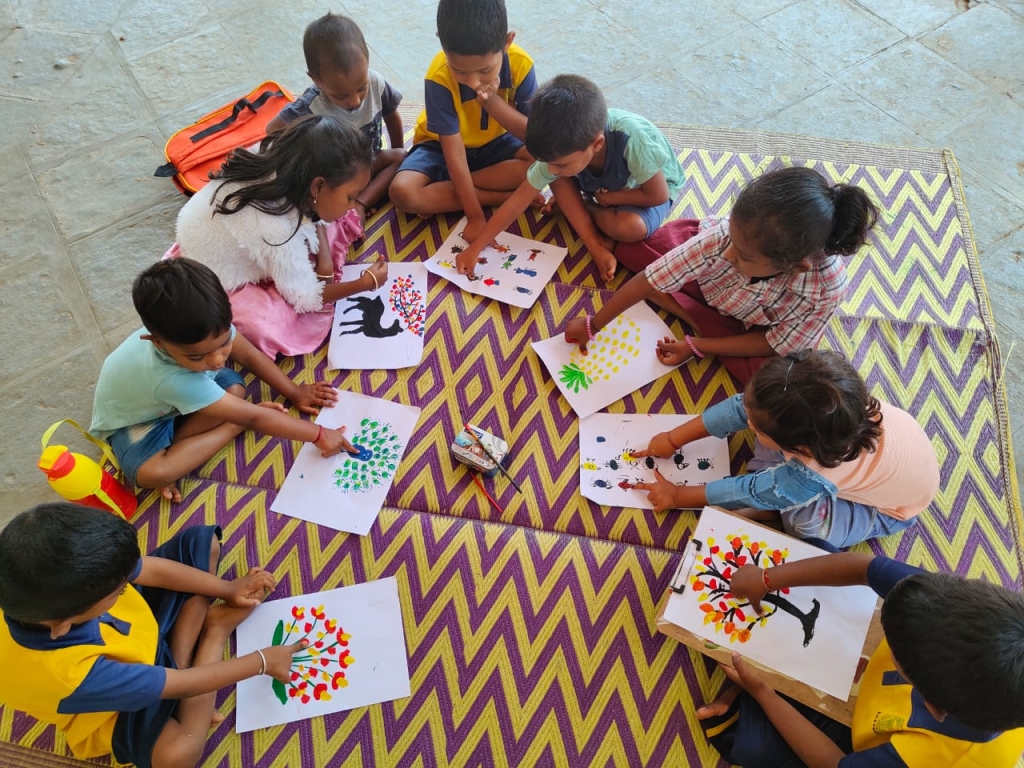
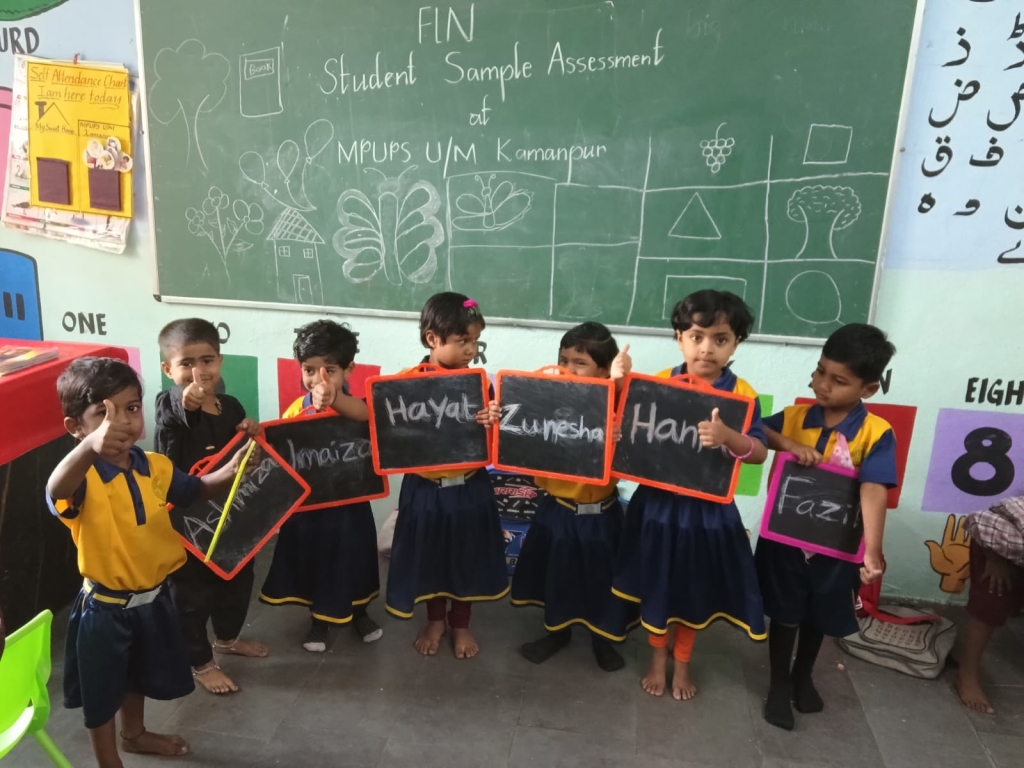
Across districts such as Jagityal, Rangareddy, and Hyderabad, classroom observations showed that when classrooms were organized into learning corners, supported with teaching–learning materials, and made visually welcoming, children’s engagement and participation improved. With the introduction of the Teacher Handbook and teacher training, classrooms became more structured and activity-based, supporting children’s learning and school readiness. Children picked up early vocabulary faster when activities were repeated and familiar. Transitions became smoother when routines stayed consistent. Fine-motor activities helped children engage more easily with writing later. Group play built social skills and confidence. Mixed-age classrooms worked well when guided with warmth and clear structure.
These observations align closely with global research. Decades of research show that the ages of three to six are a period of rapid growth in language, problem-solving and socio-emotional development.
Early childhood is a critical period for brain development, with key foundations for language, cognition and socio-emotional skills formed before age six (Center on the Developing Child, 2007). Landmark studies such as the Perry Preschool (Schweinhart, 2005) and Abecedarian (Campbell, 2012) projects show that quality early education leads to improved academic and life outcomes. With over 85% of brain development occurring before age six (NEP, 2020), these early years are crucial for school readiness (UNICEF, 2019) and long-term success.
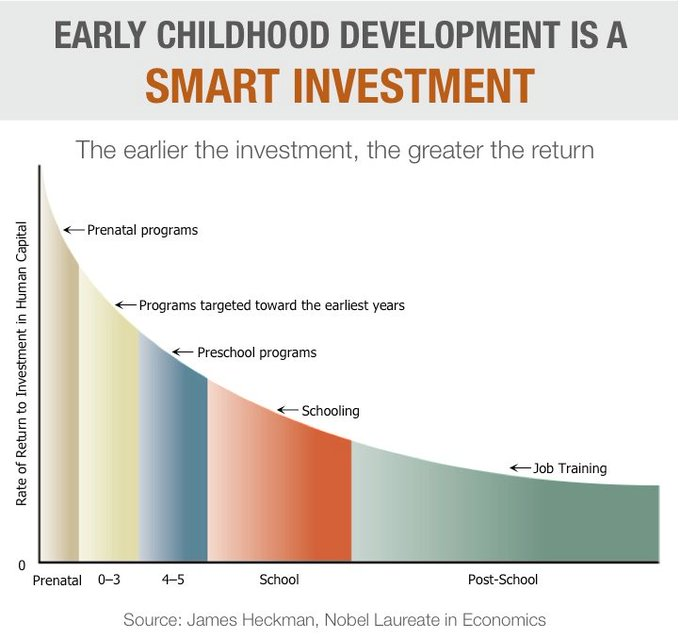
The Heckman principle captures this insight simply: investments made early in a child’s life yield the highest returns. In Telangana, this principle plays out every day in classrooms like Tandriyal.
Why Telangana Introduced Pre-primary in Schools
The decision to bring pre-primary into government schools grew from three reinforcing insights:
- Children benefit from time to develop early language, motor skills and classroom routines before entering Grade 1. Pre-primary provides this gentle, essential runway.
- When foundational skills are in place, children engage more joyfully with reading, writing and numbers. Teachers report smoother transitions and stronger participation in early grades.
- With private schools offering Nursery, Lower Kindergarten (LKG) and Lower Kindergarten (UKG), introducing pre-primary in government schools ensures families have access to a comparable, high-quality option, while giving children continuity in a familiar environment.
Together, these insights shaped a forward-looking decision: introducing pre-primary classrooms for four to five-year-olds in 1,362 government schools across Telangana.
Creating the Right Conditions for Early Learning
The state focused on three core elements: people, environment and learning resources. Each classroom has a dedicated instructor supported by a helper (aaya). This balance allows instructors to focus on learning interactions, while helpers support routines that keep the day calm and predictable. Field observations from Hyderabad, Jagityal also showed that morning assembly helps children engage in body movement, interact with each other, and set the tone for the day. District Collectors were supported to transform classrooms into child-friendly spaces with low-height furniture, free-play corners, story areas, floor seating and inviting visuals that encourage exploration and help children feel safe which was across the districts.
State Council of Educational Research and Training (SCERT) introduced a structured set of learning materials, including teacher handbooks with day-wise guidance, activity books that blend play with early literacy and numeracy, story cards and contextual teaching-learning material (TLM) inspired by Jaadui Pitara. Instructors often share that the handbook brings clarity and confidence, especially when managing mixed-age classrooms. A District Resource Person (DRP) from Sircilla, R. Swarajya Laxmi, noted that circle time creates space for children to speak freely and helps build a strong teacher-child bond.
Building Ownership Through Training
Instructors participated in a five-day training focused on pedagogy, classroom routines, transitions and effective use of learning materials. School leaders were also oriented to support pre-primary sections and strengthen continuity between pre-primary and primary grades. The training was conducted at TSIRD and facilitated by State Resource Persons, anchored by SCERT and supported by CSF.
Early shifts are already visible: instructors demonstrate greater confidence, classrooms follow more predictable routines, transitions are smoother, and learning materials are being used more consistently in daily classroom practices. Classroom observations across districts indicate that instructors are increasingly able to manage the daily schedule, use the teacher handbook for planning, and conduct activities with greater confidence and structure.
How Pre-primary Strengthens FLN
Pre-primary forms the first step in the FLN journey. It nurtures skills that directly shape learning in Grades 1 and 2 including listening, vocabulary, expression, motor coordination, early number sense, confidence and independence. When these foundations are strong, children engage more easily with textbooks, classroom tasks and peer interactions.
The Road Ahead
As the initiative grows, the focus will be on deepening parent engagement, moving towards Grade 1 entry at age six to enable a full three-year foundational cycle, expanding pre-primary to more schools, strengthening classroom quality through coaching and sustaining early-years pedagogy in daily practice.
Telangana’s pre-primary mission reflects a clear belief: strong foundations create confident learners. The classroom in MPPS Tandriyal, full of movement, curiosity and emerging language, captures the spirit of this shift. This is not just an addition to the system; it is a commitment to getting the beginning right. And that beginning matters for every child — for Md. Aleeza, Dhruvan Teja, Sridhanya and Yakshith — whose first experiences of school are building the foundation for lifelong learning.
Keywords
Authored by

Murali Krishna
Senior Project Manager – Foundational Learning (DPMU), Central Square Foundation
Share this on