

 Go Back
Share
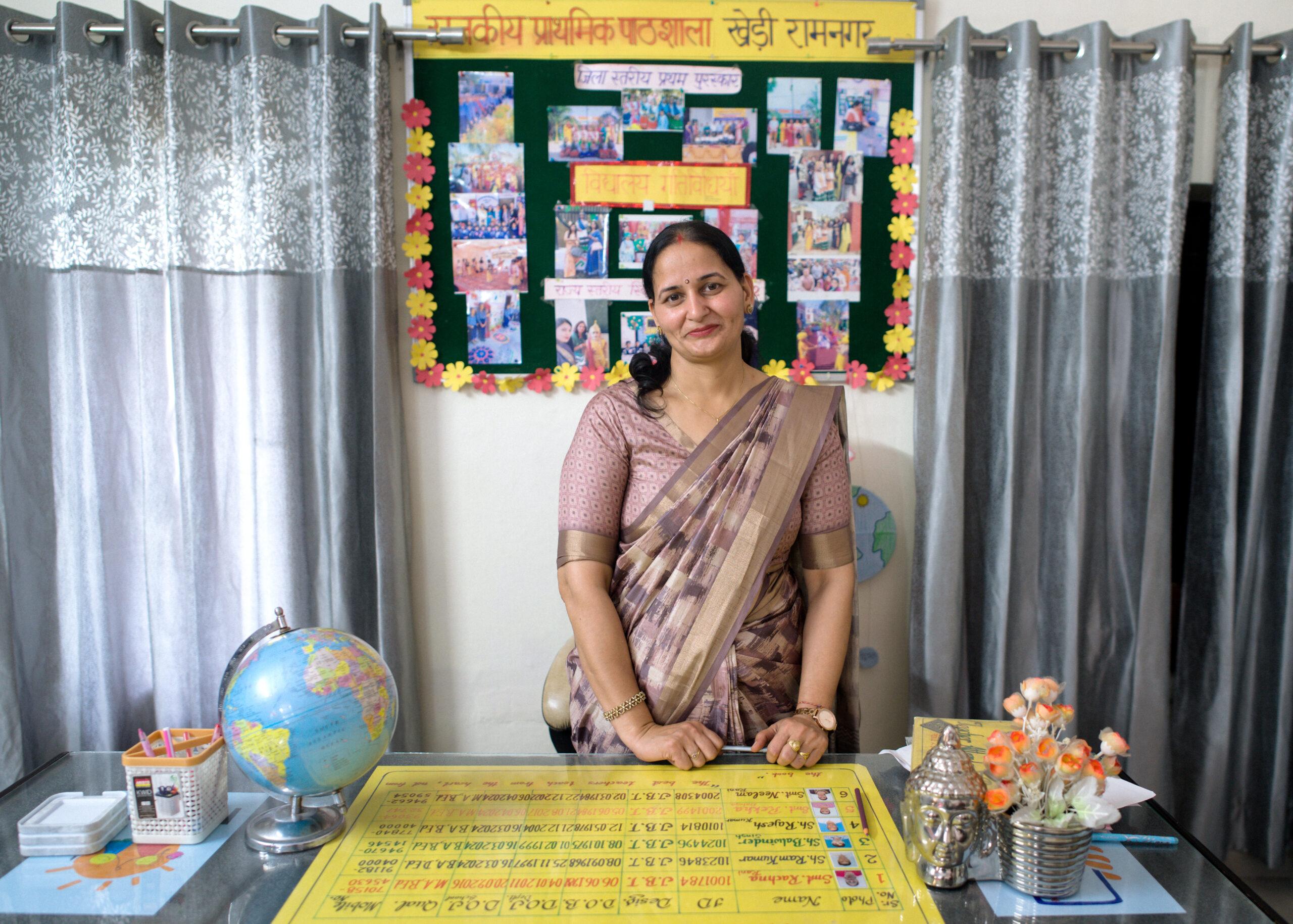
Rachna Rani: Nurturing Confident Learners through NIPUN Haryana
Sep 1, 2026
At the Government school in Kheri Ramnagar block of Kurukshetra district, learning is no longer confined to textbooks and blackboards. Classrooms are filled with teaching-learning materials, children participate in activities and competitions, parents turn up for regular meetings and even the youngest students are beginning to read, write and express themselves with confidence.
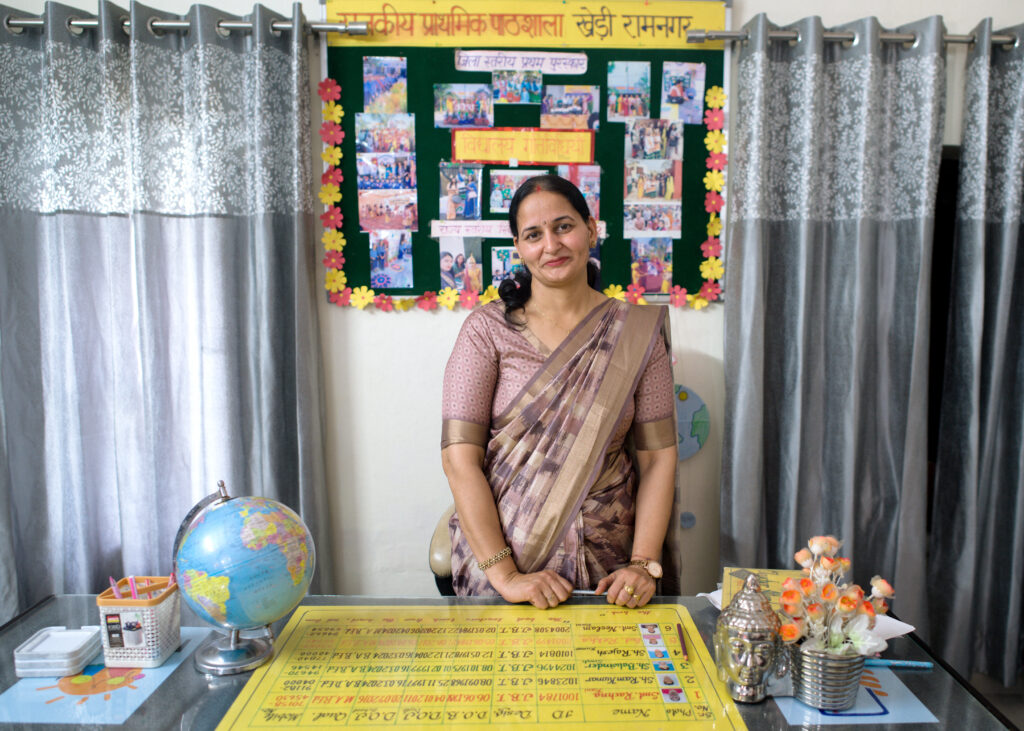
For Rachna Rani, the school’s head teacher, the change is striking precisely because she has seen what the classroom looked like before the NIPUN Bharat Mission. Having worked at the school since 2016, she has witnessed the transformation first-hand, from children spending an entire year learning the Hindi alphabet to young learners now picking up stories, reading books and working comfortably across Hindi, English and mathematics.
“Before NIPUN Haryana, I used to spend the whole year teaching children the varnamala. Today, our children begin learning basic Hindi in Balvatika itself”
The journey began in Kurukshetra with the introduction of NIPUN Haryana in 2018. What followed was a shift in how foundational learning was approached in the early years of schooling. Earlier, Rachna recalls, teachers could spend almost the entire year teaching children the varnamala. Today, children entering Balvatika begin developing these skills much earlier. The change is visible in the classroom. First-grade students are reading English books, while children are also learning Hindi and mathematics with greater ease. Some students can recite multiplication tables up to 20 and by Class 2, children are able to create their own stories and sentences. Rachna says the difference is not only in what children are learning, but also in how they approach learning, with greater interest, enthusiasm and confidence.
A key part of this shift has been creating an environment where children feel comfortable learning. The school has made its classrooms print-rich, with Teaching Learning Materials used across subjects and topics. Teachers use flashcards, story charts and subject-specific kits to make concepts easier to understand. Rather than relying only on verbal instruction, children get opportunities to engage with concepts through activities and materials. The school has also secured first place twice in print-rich classroom competitions. The approach has also encouraged teachers to become more active participants in their students’ learning. Teachers participate in classroom activities, use TLMs and flashcards to engage children, and learn from one another. Rachna describes a growing sense of healthy competition among teachers, with one teacher’s classroom practices motivating others to try new approaches.
“Today, our first-grade students are not only learning Hindi but are also reading English books and learning mathematics with ease. It surprises me to see how much they are able to learn.”
The school’s approach to foundational learning extends beyond reading and mathematics. Children are encouraged to participate in co-curricular activities, cultural programmes and competitions throughout the year. Every student gets opportunities to perform on stage, helping them become more comfortable speaking and presenting themselves in front of others. The school has participated in state-level events and cultural festivals, with students progressing to competitions across Haryana.
For Rachna, these experiences are an extension of foundational learning. When children learn to read, communicate and participate confidently, they begin to see themselves as capable learners. That confidence is also visible in their academic aspirations. Over the years, the school has seen 12 students selected for the Jawahar Navodaya Vidyalaya.
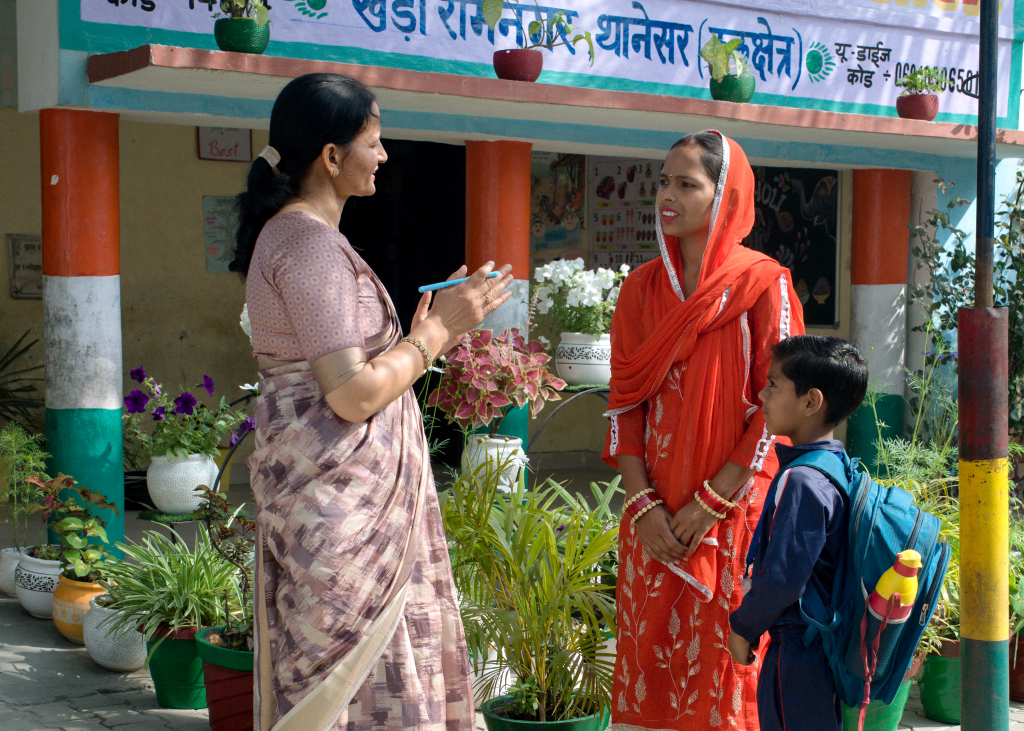
Perhaps one of the most visible changes has been outside the classroom. Earlier, getting parents to attend parent-teacher meetings could be difficult. Teachers had to call parents individually, often finding them away at work. Today, regular monthly PTMs, engagement with School Management Committee members and sharing videos of school activities through WhatsApp have helped build a stronger connection between families and the school.
Parents are increasingly interested in knowing how their children are progressing and are eager to see them participate in competitions and activities. The school grounds, once difficult to fill during PTMs, now see strong participation from families. During occasions such as Republic Day and Independence Day, the campus is filled with parents coming to watch their children perform. Rachna also notes a growing sense of aspiration among parents, who now want their children to participate and perform at larger platforms.
The story of Kheri Ramnagar school reflects a larger shift at the heart of NIPUN Bharat: foundational learning is not only about ensuring that children can read and do basic mathematics. It is about creating the conditions for children to become confident, engaged learners. In this school, that foundation is being built through many small, everyday changes, print-rich classrooms, purposeful TLMs, engaging activities, supportive teachers, regular interaction with parents and opportunities for children to step beyond the classroom.
“It is not just the children who have changed. I have seen teachers become more involved, and parents become more interested in their children’s learning. Today, everyone wants to see the children move forward.”
For Rachna, the transformation is visible not just in what children can do, but in how they approach learning. Children are more curious, teachers are more engaged, and parents are more involved.
What began as a focus on foundational literacy and numeracy has gradually become a wider culture of learning, one in which children are encouraged not only to learn, but to participate, speak up and believe in what they can achieve. And perhaps that is the most meaningful measure of NIPUN Haryana’s progress: when a child who once spent a year learning the alphabet can now confidently pick up a book, tell a story, take the stage and imagine what comes next.
Share this on